Listing sponsored by
KappaElastin™
Scientific Breakthrough. No Shots
Science response to skin aging.
www.kappaelastin.com

For Sale
Chateau in Burgundy for sale
Chateau in Burgundy

Art Institute of Chicago

111 South Michigan Avenue
Chicago, Illinois

Phone: 312-443 3600 -- 1 800 929 5800
TTY:


Statement of Purpose:

Major world class collection of

Highlights & Collections:

Take a tour through the visual history of human imagination.

See how people from all over the world have created art objects that reflect their ideas, dreams, fantasies and experiences as you explore galleries filled with one of the world's finest collections of art.


EXHIBITION CALENDAR FOR 2007


The following list of exhibitions in 2007 at the Art Institute of Chicago is current as of September 2006.  The list is subject to additions and changes prior to the opening of each exhibition. Unless otherwise noted, exhibitions are free with museum admission. 

Please call the contacts listed above in the Department of Public Affairs to confirm titles, dates, and details of exhibitions before publication.


CONTINUING FROM 2006

Silk Road Chicago at the Art Institute
Through June 30, 2007
Throughout museum

Overview: From September 2006 to June 2007, the Art Institute of Chicago, the Chicago Symphony Orchestra, and the Silk Road Project (a foundation established by renowned cellist Yo-Yo Ma) will present Silk Road Chicago 2006–2007. At the Art Institute, Silk Road Chicago will be the largest and most ambitious themed exhibition ever mounted.

Through a series of installations, concerts, and educational programs, the three institutions will explore the transmission of art and culture across space and time, using the ancient trade routes from East to West and West to East as both historical fact and metaphor.  The collaboration will culminate April 9–15, 2007, with the residency of the Silk Road Ensemble in Chicago.  Performances, demonstrations, and concerts will take place at Symphony Hall and the Art Institute.

Organizer: Silk Road Chicago is organized by the Art Institute of Chicago.

Curators: James Cuno, President and Eloise W. Martin Director of the Art Institute of Chicago; and Karen Manchester, Elizabeth McIlvaine Curator of Ancient Art at the Art Institute of Chicago.

Sponsors: Silk Road Chicago at the Art Institute is made possible by the E. Rhodes and Leona B. Carpenter Foundation; Ford Motor Company Fund
Lloyd A. Fry Foundation; and American Airlines. The Art Institute’s Silk Road Ambassadors are: Marilynn B. Alsdorf; Mr. and Mrs. John W. Jordan II
Alexandra C. and John D. Nichols; Elizabeth and Harvey Plotnick; Margot and Thomas Pritzker Family Foundation; The Pritzker Pucker Family Foundation; and Patrick G. and Shirley W. Ryan.


Silk Road Chicago at the Art Institute
The Silk Road and Beyond: Travel, Trade, and Transformation
Through June 30, 2007
Galleries 141 and 142
 
The two galleries that flank the entrance to Gunsaulus Hall at the heart of the museum will serve as an orientation center for Silk Road Chicago at the Art Institute and provide through changing artworks an introduction to the historical Silk Road, a vast network of trade routes that traversed Asia from 1500 B.C. until 1500 A.D.

Gallery 142 focuses on the commodity for which the Silk Road’s vast network of trade routes takes its name: silk. Since sericulture (the process of making silk) was developed in China, the focal point of the installation is a magnificent silk Chinese jifu, an emperor's semiformal court robe. A selection of 18th-century Japanese prints depicting women making silk is also on view, along with European paintings, Asian vessels, and textiles depicting other commodities that were traded between the East and West. Special performances and demonstrations will take place on the stage located in this gallery.

Across the hall, Gallery 141 explores the impact of cultural convergence (contact among people of disparate cultures) through travel and trade on the visual arts. This phenomenon is illustrated by a central display that traces the migration of the blue-and-white pottery decoration from 15th-century Ming dynasty vases in China to 17th-century Delft wares in the Netherlands and 18th-century Talavera vessels in North America.

Artworks from countries along the Silk Road are featured in the galleries of Asian art, and, throughout the rest of the museum, special labels highlight more than 100 works of art that illustrate the movement of artistic influence from one place and time to another. A guide to lead visitors on an exploration of the Silk Road as a historical fact and as a metaphor for cultural exchange can be picked up in Gallery 142. It will also contain a listing of special programs and performances that will celebrate Silk Road Chicago.

Organizer: The Silk Road and Beyond is organized by the Art Institute of Chicago.

Curator: Karen Manchester, Elizabeth McIlvaine Curator of Ancient Art at the Art Institute of Chicago.


JANUARY 2007

Silk Road Chicago at the Art Institute
Western Viewers, Eastern Subjects: Scenes of Empire from the Illustrated Plate Books in the Mrs. James Ward Thorne Collection
January 2-June 30, 2007
The Ryerson and Burnham Libraries

Britain’s triumph over France in the Seven Years’ War marked its emergence as a global power.  The Franco-British Treaty of Paris, which was signed in 1763, gave Britain control over India, which in turn encouraged British Citizens to travel to the subcontinent. In the second half of the eighteenth century, a series of British military victories in India intensified the interest among the British public in the new colony.

Travel over land to India exposed artists and adventurers to other sights and cultures in the Near East—Egypt and the Ottoman Empire— in addition to those of the Indian colonies.  Those who traveled by sea did so for scientific or political gain; Cook’s voyages to the Pacific for example, added many polities such as Australia to Britain’s sphere of influence. This activity fed a publishing industry eager to supply visual information about Britain’s exotic lands to a curious and image-hungry public.

Selections from the Mrs. James Ward Thorne Collection of illustrated books are evidence of the energy and imagination that went into the “picturing” of these exotic lands as well as a primary source for the historical depictions of India and the Near East.


FEBRUARY 2007

Silk Road Chicago at the Art Institute
Focus: Gulnara Kasmalieva and Muratbek Djumaliev
February 1–May 6, 2007

Gulnara Kasmalieva (Kyrgyz, born 1960) and Muratbek Djumaliev (Kyrgyz, born 1964) are a vital artistic force in a young nation with an ancient history. They use photography, video, and performance within a critical and conceptual framework to unpack the multiple layers of Kyrgyz identity: including the country’s traditional shamanic and nomadic roots; the recent Soviet Communist past; and the current global capitalist reality. In addition to successful careers developed over more than two decades, the artists have cultivated an artistic community in a country where institutional infrastructure for the education and support of artists has long since been abandoned by the government. Adopting the roles of cultural administrators, mentors and facilitators, they organize collaborative groups, maintain studio and editing facilities and curate exhibitions.

For their focus exhibition Kasmalieva and Djumaliev will present the US museum debut of the multi-channel video installation, Trans Siberian Amazons, 2004, a version of which was recently featured in the first Central Asian Pavilion in the 51st Venice Biennale. Shot during a summer 2003 art tour organized by Kasmalieva and Djumaliev to encourage artistic cultural exchange among a group of artists traveling throughout the Kyrgyz Republic and Siberia, the video portrays two women traders hauling domestic goods by train across great stretches of Central Asia. Previously employed in the professional sector, these women and others like them have been forced, as a result of economic devastation, to take up small-scale trade and transport in order to support their families. The camera captures an intimate portrait of the protagonists who, nostalgic for a bygone era, pass time singing the Soviet songs of their youth in the dim confines of the train car. Meanwhile outside, vast desolate landscapes sweep past, each one an echo of the last thwarting any desire to mark the distance traveled.


Cézanne to Picasso: Ambroise Vollard, Patron of the Avant-Garde
February 7–May 13, 2007
Regenstein Hall

Ambroise Vollard (1867–1939) may well have been the most prescient contemporary art dealer of his generation. He commissioned paintings, prints, and illustrations from artists who have since become household names, among them Paul Cézanne, Vincent van Gogh, and Henri Matisse. Though past exhibitions have been devoted to Vollard’s role as an influential publisher, Cézanne to Picasso: Ambroise Vollard, Patron of the Avant Garde addresses Vollard’s achievement as an innovative patron and a powerful catalyst in turn-of-the-century Paris. With major loans from international collections, this exhibition promises to be a once-in-a-lifetime event.

Vollard was in his early 20s when he abandoned a legal career to open a small art gallery. He established himself by presenting Cézanne’s first ever one-man exhibition in 1895; a significant van Gogh retrospective in 1896; a Paul Gauguin exhibition in 1898; and Pablo Picasso’s first exhibition in France, to name a few. Over the succeeding years, Vollard bought and sold pictures and on occasion he purchased the entire contents of artists’ studios, sometimes keeping the pictures for years until he felt that the market would be receptive.

Cézanne to Picasso: Ambroise Vollard, Patron of the Avant Garde will also address Vollard’s seminal role as a publisher of fine prints and livres d’artiste (fine art books). At the start of his career, printmaking had been successfully revived as an original art form. By commissioning artists rather than illustrators to decorate texts, Vollard more or less invented the genre of the livre d’artiste. His masterpieces included such diverse examples as Paul Verlaine’s Parallelement, illustrated with lithographs by Pierre Bonnard (1900), and Honoré de Balzac’s Chef d’oeuvre inconnu, illustrated by Picasso (1931). A brilliant promoter of the artists he represented, Vollard was a self-promoter as well. The exhibition will conclude with a room of portraits of him, ranging from Cézanne’s austere homage (1899) to Picasso’s Cubist analysis (1910) to Auguste Renoir’s vision of Vollard as a toreador (1917).

Venues:
Metropolitan Museum of Art:  October 3, 2006–January 7, 2007
The Art Institute of Chicago: February 7–May 13, 2007
Musée d’Orsay, Paris: June 4–September 14, 2007

Publication: A scholarly catalogue will accompany the exhibition.


MARCH 2007

Silk Road Chicago at the Art Institute
Perpetual Glory: Medieval Islamic Ceramics from the Harvey B. Plotnick Collection
March 31 – Aug 12, 2007

Perpetual Glory will comprise approximately 100 examples of early ceramics from the cultures of the Islamic West Asian lands of modern Iran, Iraq, Turkmenistan, Uzbekistan, and Tajikistan, as well as selected pieces from Egypt and Syria. The Plotnick collection is among the finest in the United States and affords the Art Institute the opportunity to present extraordinary examples of this important and long-treasured western Asian artistic tradition. The exhibition will emphasize the achievement of Western Asian ceramic work, comparable in date to that of the Tang to Sung Dynasties in China, and the result of artistic exchanges both west and east along the Silk Road. A fully illustrated, 160-page catalogue, authored by Oya Pancaroglu of the Oriental Institute, Oxford University, England, and distributed by Yale University Press, will accompany the exhibition.


JUNE 2007

Jeff Wall
June 30–September 30, 2007
Gallery TBA

Vancouver-based Jeff Wall (b. 1946) is one of the most acclaimed and influential photographic artists of his generation, and this exhibition will present a comprehensive overview of Wall’s nearly 30-year career.

Wall uses state-of-the-art photographic and computer technology to make pictures that evoke the composition, scale, and ambitions of the grandest history paintings. His often giant, color transparencies are mounted on light-boxes that combine the seductive glow of a cinema screen or public advertising with the physical presence of minimal sculpture. Over the last three decades, Wall's intellectual rigor and critical accomplishment have aided significantly in placing photography at the very center of contemporary art discourse. His works often have the formal clarity of documentary photography or photojournalism, yet almost all of his photographs rely on staged or constructed artifices.

Both the degree and nature of Wall’s inventions vary significantly from picture to picture. In some works, the scene has been created through the conventional manipulation of objects or individuals in real time and real space. In this sense, Wall works as a film director might, using sets, lighting, and camera angles to stage a narrative or effect an illusion. At other times, he relies upon virtual manipulations, creating a fantasy image with no real referent in the actual world through the aid of computer technology and digital montage. Since 1991, many of his major works are the result of digitally conjoining several discrete photographic moments shot “in the field” with manufactured images produced in the studio.

The exhibition will also travel to the Museum of Modern Art in New York and the San Francisco Museum of Modern Art.

Curators: Peter Galassi, Museum of Modern Art; Neal Benezra, San Francisco Museum of Modern Art; and James Rondeau, Art Institute of Chicago.

JULY 2007

Lorenzo Ghiberti’s Gates of Paradise
July 28–October 13, 2007
Gallery TBA

In 1452, Lorenzo Ghiberti was commissioned to design a pair of bronze doors for Florence’s Baptistry. He labored on the task for 27 years, creating what Michelangelo considered “truly worthy to be the Gates of Paradise” for their remarkable beauty and grandeur. For the past 25 years, Ghiberti’s masterpiece has undergone extensive restoration that is nearly complete. To celebrate the conclusion of this arduous project and its stunning results, three relief panels from the left door of the Gates of Paradise and sections of the building’s frieze and door frame will travel to North America in an unprecedented exhibition. This presentation will afford a once-in-a-lifetime opportunity to view Ghiberti’s work up close before the individual elements are reintegrated with the rest of the door and put on permanent display in a hermetically sealed case in the Museo dell’Opera del Duomo in Florence, never to travel again.

Depicting the stories of the Creation, Jacob and Esau, and David, the panels will give viewers a coherent vision of Ghiberti’s artistic program and his development as an artist over the course of the project. The Creation panel documents the earliest of Ghiberti’s work on the doors, including splendid renditions of nudes, nature, and the hosts of heaven. The Jacob and Esau panel, with its nearly three-dimensional foreground figures, masterful scientific perspective, and impressive architecture shows the artist in the vanguard of Florentine illusionism and storytelling. Finally, the David panel, with its representation of one of Florence’s most important civic heroes, shows a tumultuous battle and impressive city scene executed in a novel mode of representation not seen in previous works.

The complex nature of the restoration will be made clear by the juxtaposition of restored and unrestored sections of the foliate frieze and two decorative heads, one resplendently clean, the other still disfigured by damaging surface deposits. Videos will document the restoration process, which included submerging the main reliefs in large baths, meticulously cleaning some parts by hand, and working on others with cutting-edge laser techniques.

Sculptor, painter, draftsman, architectural consultant, stained glass designer, entrepreneur, author of a treatise on the arts, and the first artist to write an autobiography, Ghiberti could honestly declare in his Commentaries that “few things of importance were made in our city that were not designed or devised by my hand.”  The seven works in this exhibition, while only representing a small portion of his creative outlet, confirm that Ghiberti had good reason to boast.

The exhibition will also travel to the High Museum of Art in Atlanta and the Metropolitan Museum of Art in New York.

Curator: Bruce Boucher, Eloise W. Martin Curator of European Decorative Arts and Sculpture, and Ancient Art at the Art Institute of Chicago.


NOVEMBER 2007

Jasper Johns: Gray
November 4, 2007–January 1, 2008
Gallery TBA

As one of the most important living artists, Jasper Johns (born 1930) has been the subject of numerous exhibitions, many of which explored his signature use of flags, numbers, and other emblems. This exhibition explores for the first time the artist’s use of gray in his paintings, sculptures, prints, and drawings from 1955 to the present and tracks Johns’ application of the color from his youth to maturity—an investigation that provides a framework for understanding the development of the entire oeuvre.

Every one of Johns’ major iconic, serialized forms has been, at one stage or another, articulated in gray. The intellectual and emotional significance of this color in to his work has changed remarkably since 1955, when he used it initially as a statement of skepticism, quietude, or anticipation. Gray has since evolved in Johns’ work as an agent in a profound examination of the very meaning of color itself. The predominance of gray in his recent Catenary series, which self-consciously summarizes the artist’s career, takes on new meaning in the context of this exhibition’s thesis.

More than a color, gray will be further considered as a material condition. For Johns it seems the most appropriate value to present "conceptual" art as it stimulates vision the least. Perceptually inert, gray does not preclude the presentation of ideas. Conversely, gray has been, for the artist, a vehicle for thinking about color. Indeed some of his most expressively rich statements are made in gray.

This exhibition will also travel to the Metropolitan Museum of Art in New York.

Curators: Douglas Druick, Searle Curator of European Painting and Prince Trust Curator of Prints and Drawings, Art Institute of Chicago; James Rondeau, Frances and Thomas Dittmer Curator of Contemporary Art, Art Institute of Chicago.
 
Publication:  A major publication with contributions by Rondeau and Druick as well as Nan Rosenthal and Richard Schiff will accompany the exhibition.  


http://www.artic.edu

Hours:

Monday 10:30-5:00
Tuesday 10:30-5:00
Wednesday 10:30-5:00
Thursday 10:30-8:00 (Free hours are 5:00-8:00.)
Friday 10:30-5:00
Saturday 10:00-5:00
Sunday 10:00-5:00

Admission & Directions:

Adults: $12
Children, Students, and Seniors (65 and up): $7
Children under 12 are free. Members are always free.
The following exhibitions require special tickets at fixed prices: Cézanne to Picasso: Ambroise Vollard, Patron of the Avant-Garde and Jasper Johns: Gray

PLEASE NOTE: The Art Institute of Chicago will offer FREE admission to everyone, on all days from February 1, 2007 - February 21, 2007.

For public information, call (312) 443-3600.


Images.


Welcome!


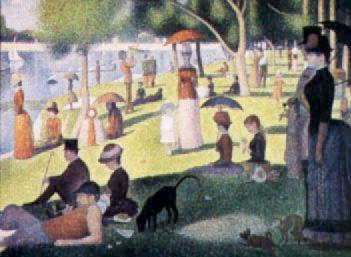
La Grande Jatte

Georges Seurat.

http://www.artic.edu


Key Personnel:

James Cuno, President and Director
John D. Nichols, Chairman, Board of Trustees.


Tell us what you think.

Do you have any additional comments concerning this site?
Do you wish to receive some information on how to get your museum on the Museums Tour?

Thank you again for your visit.


Google
 
Web www.artcom.com

This page and all contents are © 1995-2008 by Art Emotion Corp., IL. USA.
All information is subject to change - This document is non contractual.