Listing sponsored by
KappaElastin™
Scientific
Breakthrough.
No Shots
Science response to skin aging.
www.kappaelastin.com
Established in 1938, the Garden is among Florida's most popular visitor attractions and offers a variety of community programs in environmental education, conservation and horticulture. Fairchild Tropical Garden combines the beauty of its horticultural display with its role as a living laboratory and center of learning and discovery.
A world leader in
tropical plant research, Fairchild plays an important part in
preserving the biodiversity of the tropical environment, working
with other botanical gardens and research institutions around
the world.
Bike Valet
Green Mobility Network will be here Saturday and Sunday offering
their unique bike valet service at the South Gate . Bike
and $5! If you walk or ride your bike to Fairchild, you will
receive $5 off the admission price for adults and $2 for children.
It's our way of thanking you for contributing to conservation.
About Ramble
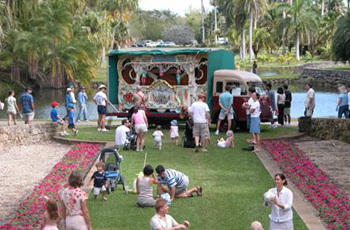
The Ramble Festival is in its 71 st year and continues to be fall’s most anticipated event in South Florida . Ramble will take place on Friday, Saturday and Sunday November 11, 12 and 13th from 9:30 a.m. to 4:30 p.m. at Fairchild Tropical Botanic Garden , 10901 Old Cutler Road , Coral Gables , 33156. Admission is $25 for adults, $18 for seniors, $12 for children 6-17 and free to children 5 and under and Fairchild members. For more information, please visit www.fairchildgarden.org
About Fairchild
Fairchild Tropical Botanic Garden is dedicated to exploring, explaining and conserving the world of tropical plants. It is one of the premier conservation and education-based gardens in the world and a recognized international leader in both Florida and international conservation. Fairchild has field programs in over 20 countries throughout the tropical world including the Indonesia , South America , the Caribbean , Africa and Southeast Asia . Fairchild’s palm and cycad collections are considered the greatest collections in the world and are nationally recognized by the American Public Gardens Association. Fairchild has the largest education program in a metropolitan area reaching more than 100,000 schoolchildren in 2011. Fairchild hosts popular events like the Chocolate, Mango, Orchid, Food and Garden, Ramble and Edible Garden Festivals, as well as an annual art exhibition, concerts, plant shows and sales, evening events and more. Fairchild is a not-for-profit organization with 45,000 members. Fairchild is located at 10901 Old Cutler Road , Coral Gables , Florida , 33156 . Admission is $25 for adults, $18 for seniors, $12 for children 6-17 and free to children 5 and under and Fairchild members. Information at www.fairchildgarden.org and on Facebook and Twitter.
Windows to the Tropics is a 16,428 square foot conservatory with extensive displays of some 1,730 species of plants from the humid tropics. In its two levels of beautiful indoor gardens are rare palms and cycads, ferns, orchids, aroids, bromeliads, fruit trees and unusual vines. Exhibits are based on themes such as plant coloration, plant-animal interactions, plant reproduction and diversity of form and function.
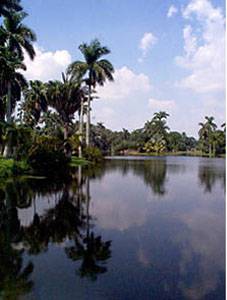
The Bailey Palm Glade features a display of unusual palms and provides a long, narrow view across the Garden's landscape, eastward toward mangrove preserves and Biscayne Bay. The Overlook, an octagonal landscape "room", offers a wide, panoramic view of the Garden's lowland areas and lakes, providing a striking architectural counterpart to the narrow view of the Bailey Palm Glade.
The Richard H. Simons Rainforest blends native Florida species with true rainforest species collected by Fairchild plant scientists from tropical forests in Latin America and other locations. With aerial irrigation systems to enhance rainfall and humidity, this two-acre exhibit offers visitors the opportunity to experience the plants and environment of the world's dwindling rain forest ecosystems.
The Gate House Museum of plant exploration is a restored historic landmark, built in 1939. Its exhibit, In Search of Green Treasure, includes plant artifacts, photographs, text panels and audio recordings about why plants are collected, how they are used, what scientists experience in the field and why their work is significant. The exhibit shows the real-life experiences of men and women who travel the globe to seek unknown plants and information about them.
Visitors now enter the Garden
through the Jean duPont Shehan Visitor Center which opened in
October 2002. It houses the Garden Shop on the first floor and the
Fairchild Ballroom on the second floor.
The Lynn Fort Lummus Endangered Species Garden, adjacent to the Gate House Museum, displays a selection of endangered plants of Florida and Puerto Rico from the Garden's Center for Plant Conservation collection. This exhibit gives visitors an understanding of the inter-relationships of endangered plants and environments and the importance of conserving the fragile South Florida ecosystem.
The Keys Coastal
Habitat, developed in partnership with the Tropical Audubon
Society, is a three-acre garden featuring a densely-planted
collection of plants native to South Florida, especially those
of the Florida Keys. It has been designed to attract migratory
birds and other wildlife, giving an overview of the local
environment and the interactions of plants and animals.
Rare and endangered species collections include about 4,000 plants of about 100 endangered, threatened or rare species from South Florida and the Puerto Rican archipelago, 15 of which are federally listed as endangered. The collection serves as an important safeguard against extinction and a resource for research, education and natural areas management. The Garden is an affiliate of the Center for Plant Conservation, a national organization dedicated to the preservation and conservation of endangered U.S. species. In addition to conserving ex situ collections of endangered plants, the Garden is active in propagating those plants, reintroducing seedlings into the wild and monitoring their long-term success.
Fairchild tropical fruit trees include an internationally significant collection with more than 450 cultivars of superior tropical fruits such as canistel, jackfruit, mango, mamey sapote and lychee. Other special plant collections include a wide diversity of plants from tropical and subtropical climates, including tropical flowering trees, bamboos, tropical vines, arid plants, hibiscus, Bahamian plants and mangroves.
The
Fairchild herbarium is the largest in the region with more than
165,000 preserved plant specimens. Strengths of the collection
include the floras of Florida, the Bahamas and Caribbean basin;
cultivated plants of tropical Florida, and worldwide palms and
cycads. The associated taxonomic and ecological reprint
collection is one of the largest compilations of botanical
literature in the southeastern U.S.; related collections include
more than 1,000 original technical botanical illustrations.
The Botanical Resource Center, and Virtual Herbarium launched in
January 1999, make the herbarium specimens and the Garden's living
collection accessible via the World Wide Web.
Exhibits & Special Events
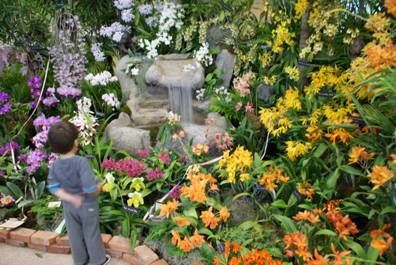
Coral Gables, FL, March 7, 2012 —Fairchild is gearing up for an amazing display of orchids from around the world! The International Orchid Festival, in its tenth year, is taking place at Fairchild Tropical Botanic Garden Friday, Saturday and Sunday, March 9, 10 and 11, 2012, from 9:30 a.m. to 4:30 p.m .
The Festival will feature over 10,000 orchid plants and more than 50 orchid growers and vendors from around the world, who will exhibit and sell these magnificent plants—sure to delight both the orchid enthusiast and those new to the spectacular world of orchids. The Orchid Society of Coral Gables will grace the Garden House with an American Orchid Society ( AOS) juried show displaying orchids for visitors to marvel at throughout the weekend. The Orchid Society of Coral Gables will also provide advice and tips on growing orchids at the Get Growing booth on the Garden House lawn.
As always, the International Orchid Festival will include educational lectures, walking tours, live music, the Orchid Tea Room, and great food!
Amidst
the exotic colors and
shapes of orchids, guests will also have the opportunity to
see Fairchild’s
current art exhibition, Will Ryman at Fairchild, Ryman’s
largest
outdoor exhibition to date that includes over 30 floral and
whimsical
sculptures placed throughout the garden.
Friday, March 9, Corbin A
Saturday March 10, Corbin A
Sunday March 11, Corbin A
Enjoy interactive
discussions on the natural history of orchids and growing tips.
Tropical Fruit
Pavilion (All
Day)
Take a journey through the
beautiful and aromatic world of the vanilla orchid.
See what's in season in our
Conservatory (All Day)
Marvel at our beautiful
orchid display.
There will also be a diverse group of live
plants that kids can observe closely with
magnify lenses and microscopes.
Young children can also select
their favorite pollinator and color an orchid
“Pollinator Mask”.
Rina Yoga will be
providing free yoga near our
Sunday, March 11
Yoga for Adults
Little Rina Yogis
http://www.fairchildgarden.org/
Interesting Butterfly Facts
Over 20,000
butterfly species are found worldwide
Florida’s
state
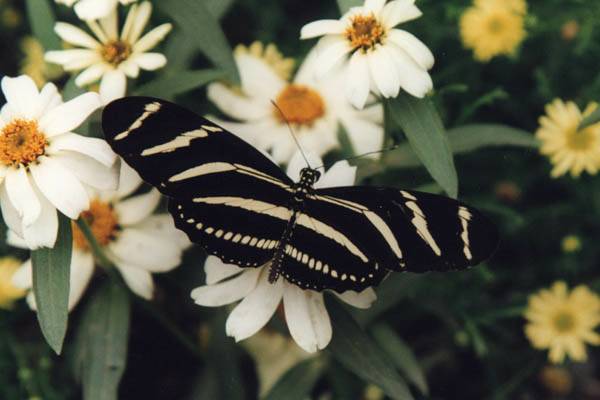
butterfly is the Zebra Longwing
The largest
butterfly in New Guinea, the Queen Alexandra,
has a wingspan of nearly a foot
The smallest
include some South Florida Butterflies, such as the Eastern
Pygmy Blue, with a wingspan approaching half an inch
Butterflies are
insects in the order of Lepidoptera
After emerging
from their chrysalis, butterflies live anywhere from a few
days to around nine months, as does the long-lived Monarch
Butterflies smell
food and mates with their antennae, taste with their feet,
and sip by uncoiling their long drinking tubes called
proboscis
Butterflies need
sun to warm them in order fly—so they sometimes sun bathe
with wings wide open
Many species of
butterfly migrate seasonally, as do birds, with the best
known North American migrant, the Monarch
Butterflies have
predators—especially birds, lizards, spiders—and will try to
confuse or discourage their enemies by releasing bad odors
or flashing bright, startling colors at predators to
distract them, allowing them to escape
Butterfly Day
will run from 9:30am to 4:30pm, Sunday, July 25,
2004.
Admission is $10 adults, $9 senior citizens, $5 children
(3-12 years), free for Fairchild members and children under
3.
Fairchild is located at 10901 Old Cutler Road, Coral Gables (Miami), Florida 33156.
For more information, please call 305-667-1651 or visit www.fairchildgarden.org.
Please call 305/667-1651 to confirm dates, times and
admission charges.
DRIVING DIRECTIONS to Fairchild Tropical Garden, 10901Old Cutler Road, Coral Gables, a suburb of Miami:
From Miami International Airport (MIA), As you leave the airport take LeJeune Rd. (SW 42nd Ave.) SOUTH. You will drive through the Coral Gables business district, and cross US 1 (S. Dixie Hwy.). Continue on LeJeune Rd. in residential area to traffic circle (Cocoplum Circle). Drive halfway around the traffic circle to Old Cutler Rd. The Garden is exactly two miles from the traffic circle. Entrance will be on your left.
From the north or Miami Beach, take I-95 south to US 1 (S. Dixie Hwy.) Go south on US 1 to SW 42nd Ave. (LeJeune Rd.). Turn left on LeJeune, and drive south about two miles to Cocoplum Circle. Continue south on Old Cutler Rd. another two miles to the Garden. Entrance will be on your left.
From the south or the Florida Keys, take US 1 (S. Dixie Hwy.) north to SW 152 Street (Coral Reef Drive). Turn right, heading east on 152 Street to Old Cutler Road. Drive north to the intersection of SW 57 Avenue (Red Rd.) and Old Cutler Road. Follow the Fairchild Tropical Garden sign at that intersection, turning right and continuing on Old Cutler Road for one mile. The Garden entrance will be on your right.
From northwest of Miami, take highway I-75 to highway 826. Go south on 826 to Sunset Drive. Exit at Sunset Drive east, and drive east on Sunset to its end at Cocoplum Circle. Bear right and take your first right on to Old Cutler Road. You will see a sign for Fairchild Tropical Garden. Drive south two miles from the circle to the Garden. The entrance will be on your left.